


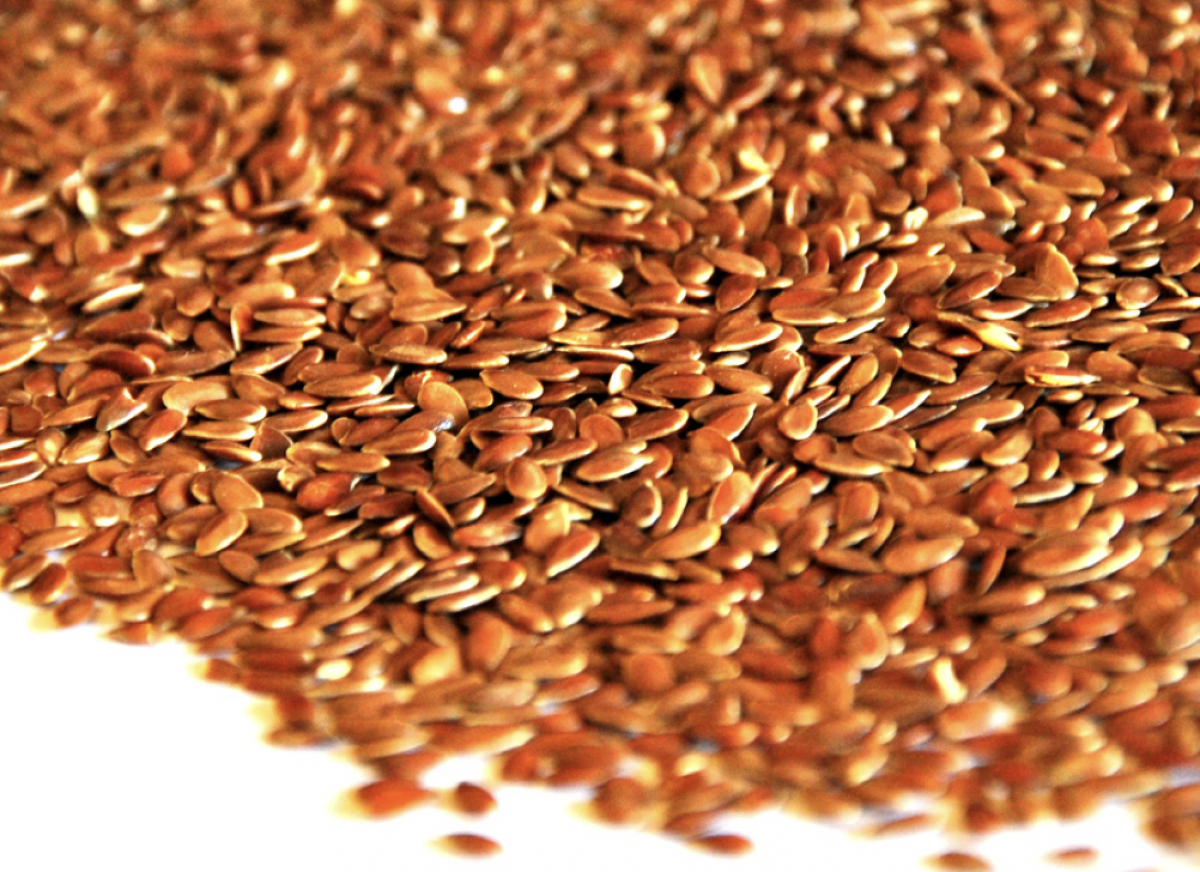
Taking flax seeds during pregnancy is not safe [1].
Flax seeds have estrogen-like activity and taking them raises some concerns among health professionals about their negative effects on pregnancy. Although there is no consistent clinical evidence of these effects, some studies have indicated that flax seeds can increase the differentiation of mammary gland cells in women, increasing the possibility of developing tumors. The effects of flax seeds on breastfeeding are unknown and therefore their consumption should be avoided in these situations [2-3].
One of the studies carried out on rats indicated that the consumption of high amounts of these seeds (5% or 10% of their diet) was related to the birth of rats with changes in the reproductive organs and their functions and that the lignans (existing in these seeds) pass into milk. In humans, a consumption of around 25g of flax seeds per day is equivalent to 5% of your diet [4].
Flax seeds also reduce blood clotting and therefore, in any circumstance in which they are consumed, this side effect must be taken into account as it can contribute to increased bleeding.
Therefore, pregnant or breastfeeding women should avoid high consumption of flax seeds or purified lignans.
Bibliography:
1 – Medscape
2 – Flaxseed. Natural Medicines Comprehensive Database. Disponível em:http://www.nlm.nih.gov/medlineplus/druginfo/natural/991.html. Acesso: 29-04-14;
3 – Khan G, Penttinen P, […], Hilakivi-Clarke L. Maternal Flaxseed Diet During Pregnancy or Lactation Increases Female Rat Offspring’s Susceptibility to Carcinogen-Induced Mammary Tumorigenesis. Reprod Toxicol. 2007 ; 23(3): 397–406. doi:10.1016/j.reprotox.2007.02.002.
4 - Tou JC, Chen J, Thompson LU. Flaxseed and its lignan precursor, secoisolariciresinol diglycoside, affect pregnancy outcome and reproductive development in rats. J Nutr . 1998;128:1861-1868.