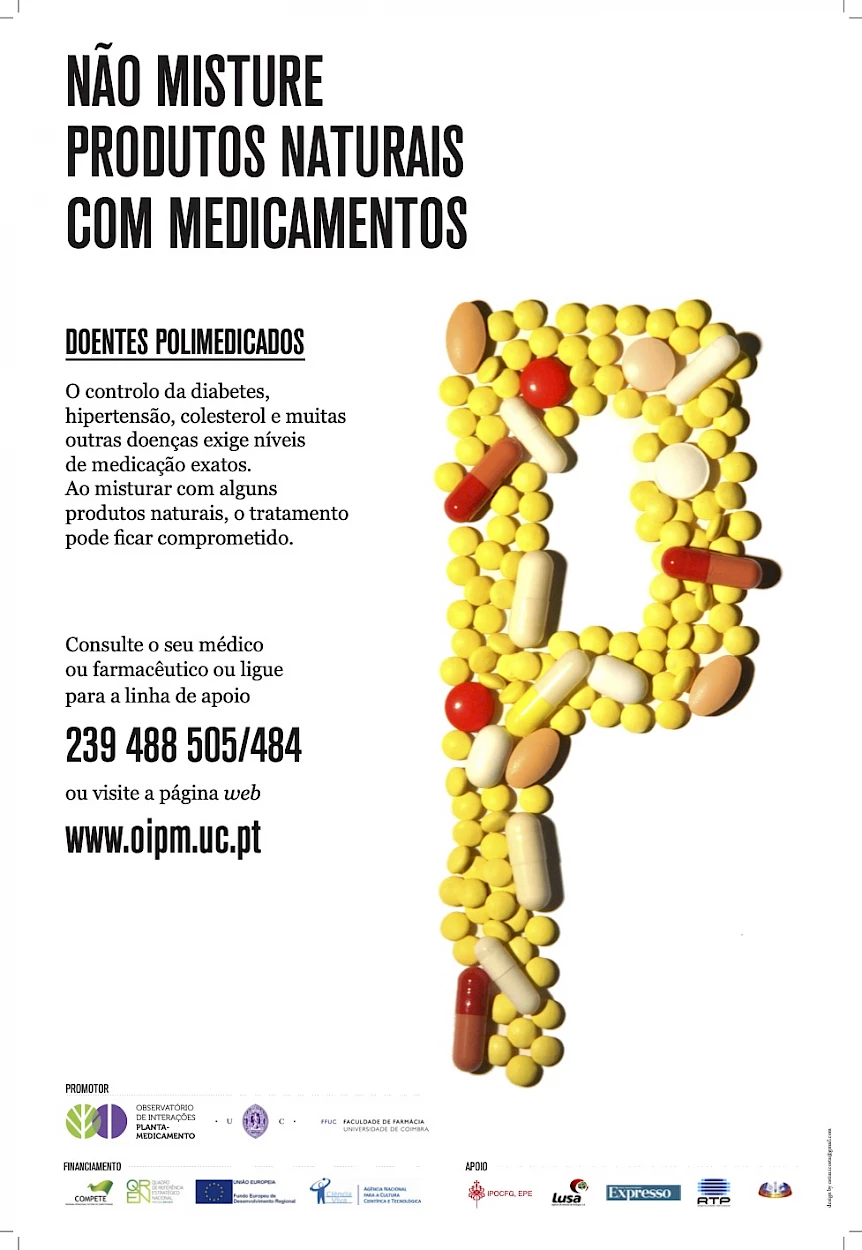


“Learning Health between Plants and Medicines” | Polymedicated
Several factors contribute to polypharmacy, but the most relevant are the presence of multiple pathologies, a frequent occurrence particularly in elderly patients; and self-medication, in which over-the-counter medicines and alternative medicine products are combined with medical prescription.
This content is being served from an external source and is not available because cookies have not been accepted.
Here is what you can do:
The pathologies with the highest consumption of medicines in Portugal, according to recent studies carried out at the Faculty of Medicine of Lisbon (Professor Alexandra Pinto and her team in 2013) are hypertension, joint pathology, hypercholesterolemia, sleep disorders and cardiovascular disease. The elderly individual takes an average of 7 medications per day and, for example, may have cardiovascular disease, diabetes, dementia and oncological disease at the same time. Chronic medication use is more prevalent in women and elderly individuals. Polypharmacy increases the risk of iatrogenic disease (adverse reactions to medication), and it is estimated that the risk of adverse reactions is 6% when two medications are administered simultaneously.
Professor Anabela Mota Pinto, Professor at the Faculty of Medicine of the University of Coimbra and founding member of OIPM, defines what is meant by Polymedication and that it is the consumption of at least five different medicines. The research group it is part of (Professor Catarina Resende de Oliveira and Professors Santos Rosa, and Silveira Botelho, A. Morais and ManuelTeixeira Veríssimo) has developed work to understand and help with active aging, having published a study on Study of the Profile of Aging of the Portuguese Population. (High Commissioner for Health - Ministry of Health. 2010).
A factor of great concern in self-medication is the fact that on average 70% of people who take so-called natural medicines do not tell their doctor that they are taking them. It is a common understanding that what is natural is not harmful, and not only do they not tell the doctor, they also ignore that the “tea” they drink daily can have direct interference with the medicine prescribed by their doctor.
There are numerous examples of plants and natural products that can interfere with medication, and as a precautionary measure the OIPM carried out a risk assessment and highlighted the following among the most consumed therapeutic groups:
- The effect of antihypertensives (medicines to lower blood pressure) can be enhanced by gingko or garlic (when consumed in large quantities in food, or in supplements).
- The opposite situation can happen, its activity can be contradicted in cases of consumption of large amounts of green or black tea (from the Camellia sinensis tea plant) throughout the day, since this tea contains caffeine, which increases blood pressure.
- The same can happen with Asian ginseng and licorice.
In turn, the effects of medications used to control sugar levels in diabetes can be exacerbated if at the same time plants such as aloe, guar gum, psyllium, linseed, American ginseng, noni, blueberries, burdock, elderberry, among others. This can result in episodes of hypoglycemia, which are generally associated with medication and never with products that are being consumed simultaneously.
The effect of cholesterol-lowering medications (simvastatin or atorvastatin) can be reduced by continued consumption of St. John's wort or sage, or even by a large amount of orange juice daily. However, these same medicines may remain longer in the body due to the consumption of other plants such as ginseng, aloe and golden root. This situation may result in a higher incidence of side effects and toxicity associated with the medication, such as rhabdomyolysis and consequent muscle pain.
Gingko biloba may also interact with anticoagulant medications (e.g. warfarin), antiplatelet medications (e.g. acetylsalicylic acid), antihypertensive medications (e.g. nifedipine, nicardipine), antidepressants (e.g. Trazodone), cardiotonics (e.g. digoxin) , between others.
Aloe vera can also interact with cardiotonics (e.g. digoxin), thiazide diuretics, antiplatelet agents (e.g. acetylsalicylic acid), anesthetics (e.g. sevoflurane, triggering bleeding as it reduces platelet aggregation) and even with some antineoplastics.
Green tea may interact with anticoagulants (e.g. warfarin) and medications used to treat cancer (e.g. bortezomib).
For more information, OIPM has a support line for the population and health professionals, 239488484