
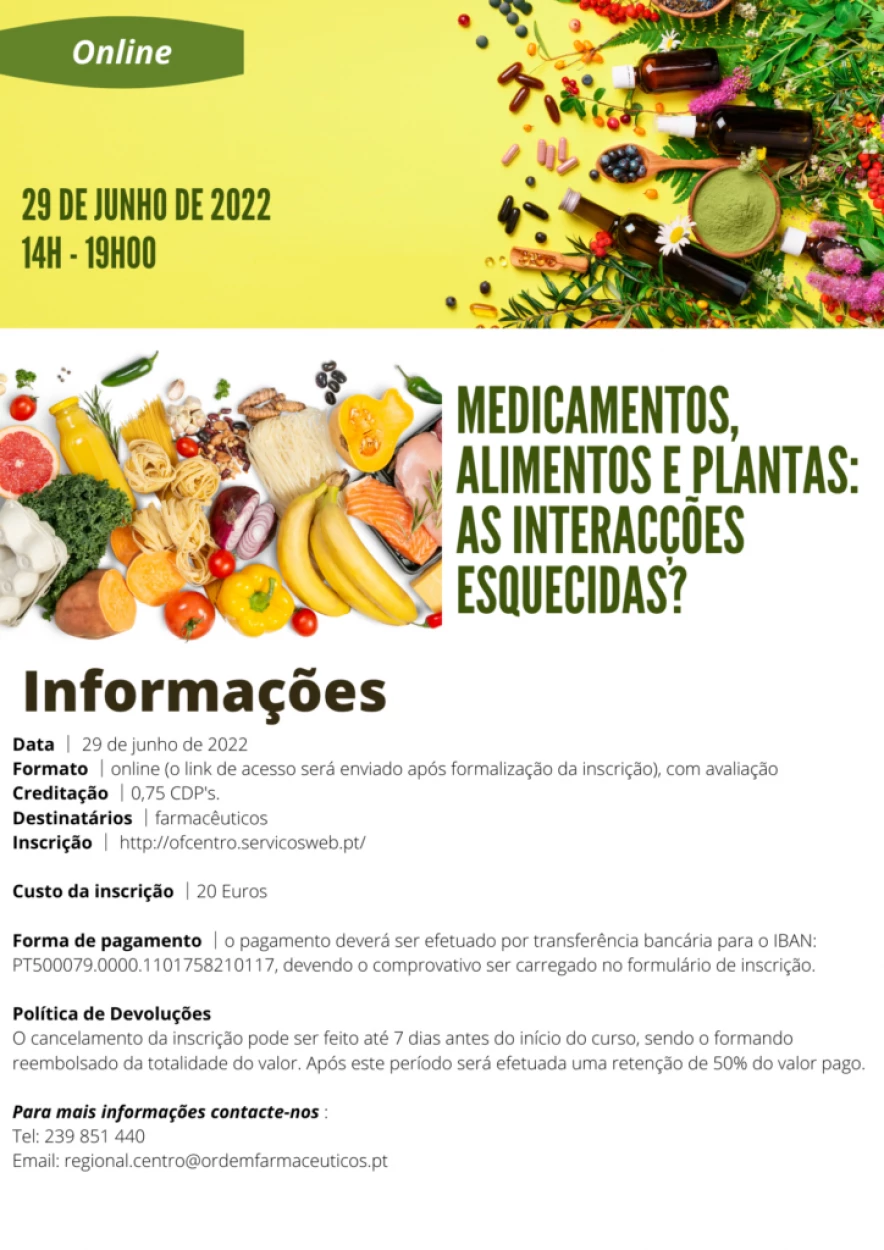
This course aims to review the fundamentals of interactions between foods, medicines and medicinal plants, addressing the most significant examples, and discussing some clinical cases.
Food constitutes, regardless of any socio-cultural, economic or temporal constraints, a primordial and indispensable factor in maintaining human well-being and health. This integrity can, however, be disturbed in the event of a deficiency of one or more of the essential nutrients, as a result, for example, of the institution of drug therapy. On the other hand, nutrients can interact with drugs, leading to changes in the expected therapeutic response, which constitutes a problem of great relevance in clinical practice.
Although they are not reported with the same frequency as drug interactions, interactions between food and medicines are much more likely to occur, given that food is unquestionably the substances most commonly associated with the oral intake of medicines.
On the other hand, there is also growing evidence regarding the taking of medicines and other herbal products, which in many cases seriously jeopardizes the safety and effectiveness of the medicines and the safety and health of the patient himself.
This type of interactions, many with clinical translation, are devalued or unknown, fundamentally because the patient does not communicate their use to the health professionals who accompany them.
At a time when the pharmaceutical profession is increasingly moving towards the creation of new and more differentiated pharmaceutical services, the pharmacist can play an important role in detecting these interactions, monitoring the process of using the medicine and also the therapeutic results. .
In a partnership with Hollyfar, those enrolled in the course will be offered access to the e-book “Medicines, Food and Plants: forgotten interactions?“, authored by the course trainers.
Informações
Programa